
By Britni Bateman
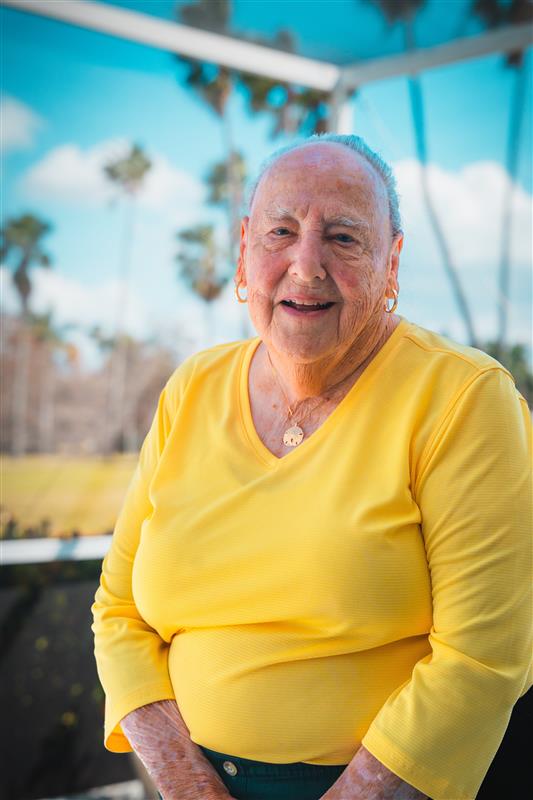
Dr. Charlotte West built a career on one unwavering belief: women deserve the same opportunity to compete, learn and lead as anyone else.
Surrounded by memories from a 42-year career at Southern Illinois University Carbondale, West reflected on the steady, determined work that helped transform women’s athletics at SIU from a modest program into a nationally recognized department with a $1 million budget supporting 11 varsity sports.
“It was an evolution,” West said. “What it is, is one step at a time.”
A reluctant arrival that became a calling
West came to Carbondale to interview for a position in women’s physical education after completing graduate study at the University of North Carolina at Greensboro. At the time, women’s athletics operated within the physical education department, and SIU sought a faculty member who could teach multiple sports and activities.
She was not convinced Southern Illinois would become home.
On the drive out of town after her interview, she assumed she would never return.
“I said goodbye, Carbondale, I won’t see you again,” West said.
Then Dorothy Davies, a leader in SIU’s women’s athletics program and the namesake of Davies Gymnasium, called to offer her the position. West left her dorm room so she would not have to answer the phone, but Davies tracked her down.
“I said, OK, I’d come,” West said. “And what a wonderful decision because I had 42 years there.”

Building something from the ground up
West entered the profession at a time when women had limited access to organized competition. She had played sports growing up in St. Petersburg, Florida, but when she enrolled at Florida State University, women did not compete at the intercollegiate level.
“What a shock when I went to Florida State University that women couldn’t compete,” she said. “There was nothing.”
At SIU, West taught physical education and coached softball, basketball, volleyball and golf. She started the volleyball program and later handed it to JoAnne Thorpe, who led the team to a national championship appearance. West coached basketball during a period when women’s athletics began to expand rapidly.
In those early years, women’s teams competed in “sports days,” large, one-day events that required careful coordination and creativity. There were few trained officials, so West helped teach athletes to serve as scorekeepers, timers and referees.
“We started training them to be officials, scorekeepers and timers,” she said. “That taught them respect.”
Opportunities were limited, but appreciation ran deep. When SIU received an invitation to compete in one of the first national women’s basketball championships, the program could afford only two cars for the trip to Pennsylvania. To make the trip possible, coaches had already reduced the roster and planned to cut additional players simply to fit everyone into the vehicles.
“The team asked if they could talk to us seriously,” West said. “They said they would ride four in the back seat if we wouldn’t cut anybody anymore.”
West agreed. They packed the cars, squeezed four players into each back seat and made the long drive east.
“We drove all the way to Pennsylvania and not one complaint the whole trip,” she said. “They were so thrilled to be able to go.”
Under her leadership as both coach and administrator, SIU women’s athletics grew into a nationally respected program. What began with limited funding and part-time coaching assignments developed into a structured department with 11 varsity sports and a $1 million budget.
Today, the programs she helped establish continue to thrive. Volleyball, women’s basketball and softball have combined for 15 conference championships and 20 NCAA tournament appearances, strengthening the powerhouse tradition West helped build and sustaining the competitive standard she set decades ago.
A national voice for equity
West’s influence extended beyond campus through her leadership with the Association for Intercollegiate Athletics for Women, formed in 1971. She served as commissioner of national championships and later as president, helping guide the organization during a pivotal era that coincided with the passage of Title IX in 1972.
“If I have given one lecture on Title IX, I have easily given 100,” West said.
She emphasized that Title IX reaches far beyond athletics.
“People think of it as just athletics, but it’s all of education,” she said.
Title IX prohibits sex-based discrimination in any education program or activity that receives federal funding. That includes athletics, but also admissions, academic programs, housing, financial aid, hiring practices and protections against sexual harassment and assault. The law requires institutions to provide equitable opportunities and resources based on their student population.
West said the law does not advantage one group over another. Instead, it protects fairness for all students.
“It requires schools to give women an equal opportunity in all of education,” West said. “And where men have not had opportunity, it protects them too.”
West met with federal officials, testified before congressional committees and worked alongside national advocates to protect and enforce the law. She later served on NCAA councils after the organization assumed control of women’s championships, where she championed student welfare, academic standards and institutional accountability.
The work was not without resistance. West said she faced criticism and threats for speaking out.
“But I believed in what we were doing,” she said.
Changing lives through scholarships
For West, the most meaningful outcomes were personal. She saw firsthand how athletic scholarships opened doors for women who might not otherwise attend college.
“We had some athletes that never could have gotten to college if we hadn’t offered them a scholarship,” she said.
She remembers visiting recruits in challenging circumstances and understanding how transformative an opportunity at SIU could be.
“The opportunity for these females that would not have had an opportunity, I think is most important,” West said.
That belief continues to guide her philanthropy. West regularly gives back to support Saluki athletic scholarships, ensuring future student-athletes receive the same access she fought to secure.
“As soon as I was able, I certainly wanted to give to SIU and help the program in any way I could,” she said.
The stadium that tells a story
In 1998, SIU honored West’s legacy by naming the softball stadium after her. The tribute reflects decades of leadership, mentorship and national influence.
“I was so happy that they named the softball stadium after me,” West said. “It meant a lot.”
The naming was supported by donors, colleagues and former student-athletes whose lives she influenced. A commemorative plaque inside the stadium features her image and lists individuals who contributed to the project, creating a permanent record of shared investment in women’s athletics.
When West returns to campus, she makes a point to pause there.
“I still like to enter the stadium and look at the scroll there,” she said, “that said all the people that had donated.”
For West, the stadium is not about personal recognition. It stands as a reminder of a community that chose to invest in women’s athletics and in the generations of student-athletes who would follow.
A legacy still unfolding
West remains proud of the progress she helped shape. She continues to emphasize the educational purpose of athletics and the importance of gratitude.
“One thing I hope I always taught was to appreciate the opportunity,” she said.
Through her work as coach, administrator, national advocate and donor, West helped reshape the landscape of women’s collegiate athletics at SIU and beyond. The scoreboard may not capture her full impact, but the scholarships awarded, the programs sustained and the stadium that bears her name tell a lasting story of leadership and persistence.
Learn how you can support Saluki Athletics by visiting give.siu.edu/athletics.