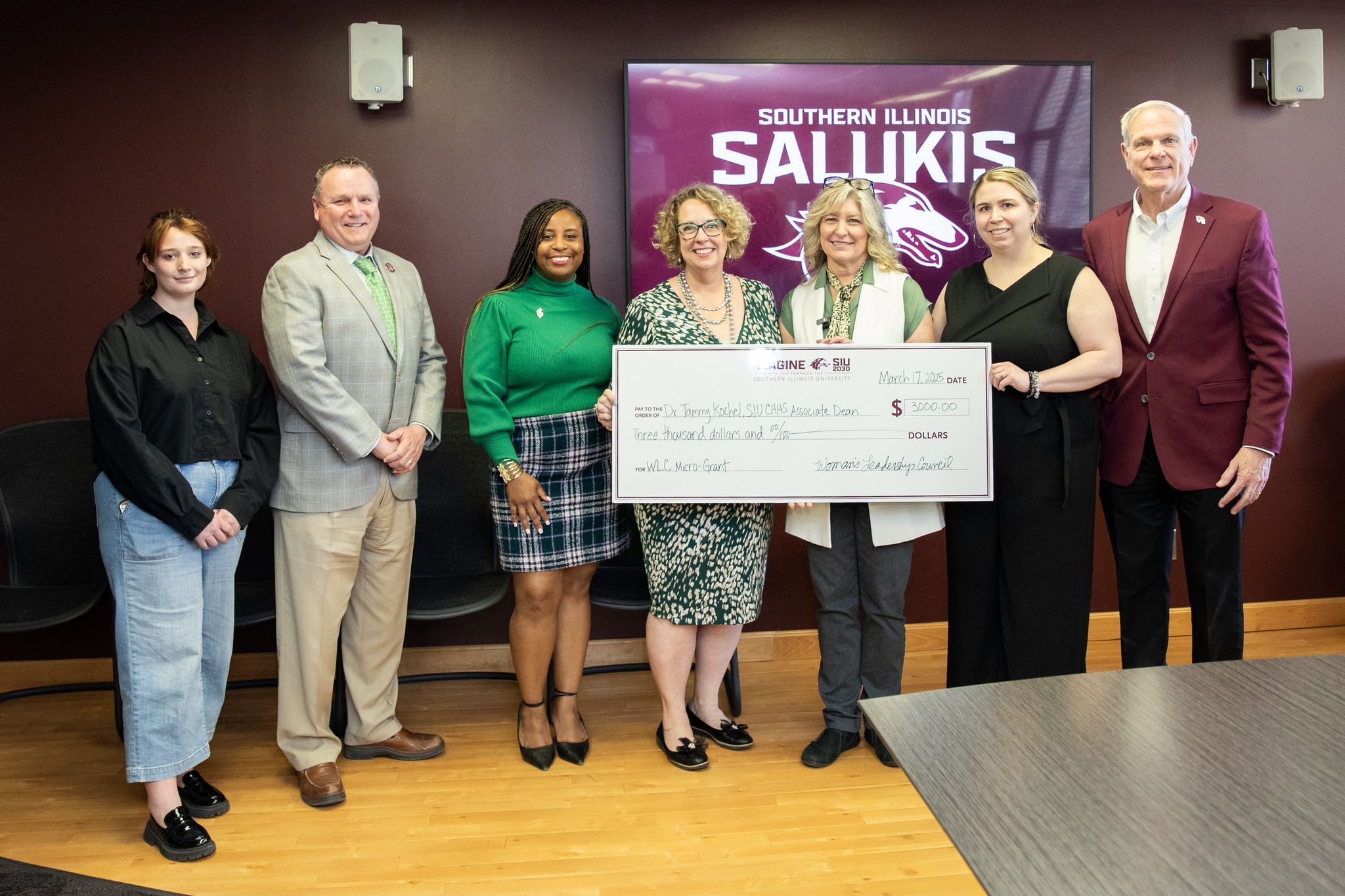
Dr. Tammy Rinehart Kochel, associate dean for research and personnel in SIU’s College of Health and Human Sciences, was awarded two of the inaugural micro-grants presented by the SIU Foundation Women’s Leadership Council this spring.
The $1,500 grants will support projects that promote mentorship and dialogue among female faculty and students, strengthening leadership and equity at SIU.
“When I heard about the micro-grants, it was an easy sell for me,” Kochel said. “I put together a couple of proposals for things that I had in my mind but did not have the resources to put into practice yet.”
Dr. Kochel plans to use part of the funding to create a workshop that fosters dialogue among female leaders at SIU, focusing on the challenges women face within the institution. The discussion will invite female faculty members and school directors to share their perspectives and personal experiences.
“We’re really excited for this opportunity for her and to see what comes out of her project,” said Mary Anderson, co-chair of the Women’s Leadership Council.
The second portion of the grant will support mentorship programs between female faculty members and graduate students. The initiative aims to “empower students by having them experience studying or conducting research under role model observation,” Dr. Kochel said.
“The objective is to be an example for what women can and do accomplish,” she said. “Having the female faculty member lead the experience is meant to build confidence and inspire female students to overcome possible gender barriers and pursue their own goals.”
Founded in 2020, the Women’s Leadership Council connects SIU students, parents, staff, and alumni to a women-focused network of Salukis who share their time, energy, resources, and experiences. The council also supports women’s initiatives across campus and provides multiple scholarships.
“Our mission is to promote SIU and to help empower women,” said Gloria Tison, co-chair of the Women’s Leadership Council. “By focusing on women faculty and related programs, we can offer more to our SIU community.”
The council’s mentorship program offers mentors leadership experience and networking opportunities while serving as role models for students in their respective fields. Mentors support the professional growth, development, and confidence of their mentees.
The Women’s Leadership Council hosts the annual Saluki Women’s Weekend, starting with the Women in Empowerment Conference on Friday, October 3. Events include the Women in Philanthropy Luncheon, Saluki Women’s Awards Presentation, Vendor Fair, and Networking Social. The weekend concludes with the Mentorship Breakfast and Saluki Women Tailgate Experience on Saturday. For the full schedule and registration, visit siuf.org/salukiwomen.
To learn more about the SIU Women’s Leadership Council or to make a gift in support of its initiatives, visit siuf.org/wlc.
Supporters of Southern Illinois University Carbondale donated $39 million in Fiscal Year 2025, marking the second-highest fundraising total in SIU Foundation history. This incredible support advances scholarships, research, and capital projects across campus.
The Foundation awarded a record-breaking $5.6 million in scholarships to more than 2,000 students, representing over 17 percent of the student body.
“Our donors are the heart of everything we do,” said Matt Kupec, vice chancellor for development and alumni relations and CEO of the SIU Foundation. “Their support provides real momentum, opening doors for students, investing in groundbreaking research and ensuring SIU continues to thrive for generations to come.”
The Foundation has increased scholarship support for five consecutive years. The FY25 total reflects a nearly 135 percent increase compared to FY19.
“I am extremely thankful,” said SIU junior and scholarship recipient Ema Dutcher. “Thanks to my scholarship, I was able to study abroad in Costa Rica. That experience shaped me both academically and personally. I will never forget it.”
Campaign Progress
The Imagine SIU 2030 fundraising campaign continues to gain momentum with more than $400 million in commitments toward its historic $500 million goal. It is the fifth-largest fundraising campaign in Illinois public university history.
Major Gifts and Milestones
The most recent fiscal year featured several high-impact gifts and building dedications:
Dr. Bob and Beth Gower made a $2.5 million gift to support research, and the McLafferty Annex was renamed the Gower Translational Research Center during a ribbon-cutting ceremony.
A $250,000 gift from Judge Phil Gilbert established the Sen. John G. Gilbert Impact Fund in honor of his father. The Sen. John G. Gilbert Administrative Suite at Simmons Law School was unveiled on April 17.
Oyd and Annette Craddock made a $25,000 gift to the College of Business and Analytics Dean’s Club Endowment Fund. In their honor, the Oyd Craddock Dean’s Conference Room was dedicated in Rehn Hall.
SIU also marked the Simmons Law School ribbon cutting on August 16 and broke ground on the Tedrick Welcome Center on October 11.
Saluki Takeover Tour Expands
In its fourth year, the Saluki Takeover Tour reached new heights with stops in Chicago, Memphis, Texas, Florida, St. Louis, and Southern Illinois. More than 1,500 alumni gathered for 14 Chancellor’s Receptions.
The Southern Illinois leg of the tour spanned 17 counties and included nearly 50 school visits and six Chancellor’s Receptions:
The kickoff at Apple Creek Golf Club drew 200 guests.
TJ’s Diamond Club at Mtn Dew Park in Marion welcomed 115 Salukis.
Café Bloom in Benton hosted 50 guests.
St. Nicholas Landmark in Chester saw 60 alumni attend.
Pizza Villa in Anna welcomed more than 80 guests.
The tour concluded at Faye in Murphysboro with nearly 100 attendees.
These events brought together alumni and community leaders and strengthened SIU’s partnerships across the region.
Celebrating Community and Leadership
The 3rd Annual Saluki Women’s Weekend Conference, held Friday, Sept. 20, 2025, welcomed more than 200 women for a day of connection, inspiration, and leadership development.
Nearly 500 guests attended the 3rd Annual Saluki Ball on Saturday, April 26, 2025, celebrating Saluki pride and raising valuable funds to support student scholarships.
SIU Day of Giving Raises $1.2 Million
The 9th SIU Day of Giving on Sept. 18 raised nearly $1.2 million from more than 1,500 donors in just 24 hours. Hosted by the SIU Foundation, the event allows supporters to give directly to the college, program, or initiative of their choice.
“This was our second Day of Giving in 2024, and moving it to the fall brought incredible energy,” said Matt Kupec, vice chancellor for development and alumni relations and CEO of the SIU Foundation. “Between the two events, donors contributed more than $4.3 million to support our students and the Imagine SIU 2030 campaign.”
Since its launch in 2017, the SIU Day of Giving has raised more than $17 million for scholarships, research, and campus priorities. The College of Health and Human Sciences led in dollars raised, while the B.E.E.R. Scholarship Endowment Fund received the most individual gifts.
A kickoff event, the Night of B.E.E.R., streamed live from the Fermentation Science Institute, added to the excitement and featured donor matches, student stories, and special guests.
A Nationally Distinctive Institution
This year, SIU Carbondale was named one of only 21 universities nationwide to earn dual recognition from the Carnegie Classification of Institutions of Higher Education as both a Research 1 (R1) and an Opportunity College and University (OCU).
“Many institutions can say they conduct top-level research, and many schools can say they offer affordability and a great return on investment,” said Chancellor Austin A. Lane. “These designations from Carnegie show very few – less than 1 percent in fact – can say both. At Southern, we can.”
These designations reflect SIU’s commitment to excellence and access. The university serves a diverse student body, with nearly 40 percent receiving Pell Grants and two in five identifying as first-generation college students.
“Salukis have always known SIU Carbondale is exceptional,” Lane said. “These national recognitions affirm our commitment to both excellence and opportunity.”
Showcasing the Saluki Spirit
In June, the SIU Foundation launched the inaugural episode of The Impact Report, a new television series highlighting extraordinary stories of innovation, opportunity, and transformation at SIU and throughout the region. Airing on WSIU, the 10-episode series will spotlight groundbreaking research, student success, and the power of philanthropy. From personal triumphs to community impact, The Impact Report brings Saluki pride to the screen in a whole new way.
Looking Ahead
With continued momentum in the Imagine SIU 2030 fundraising campaign and strong engagement from alumni and donors across the country, the SIU Foundation is poised for another successful year.
Economics alumna and former Wall Street analyst empowers students through hands-on learning opportunities
By Britni Bateman
When Susan Thrasher ’76 reflects on her time at Southern Illinois University Carbondale, she recalls the classes and faculty recommendations that helped shape a career she had not originally envisioned—but one that proved deeply rewarding.
“I was going to be a physician like my parents,” she said. “But I fell in love with economics. At SIU, I deepened my understanding of economic theory, and several professors encouraged me to take finance and accounting classes given my interest in research.”
That guidance launched a 25-year career as a research analyst on Wall Street, covering the pharmaceutical industry during an era of groundbreaking drug development. Today, Thrasher is giving back to the institution that shaped her by helping undergraduate students chart their own course through research.
The Susan C. Thrasher Undergraduate Research Fund supports students as they explore meaningful, faculty-mentored research projects across a wide range of disciplines. Five outstanding recipients of the 2024-25 award were celebrated for their contributions to innovative scholarship in fields spanning biochemistry, studio art, neuroscience, and more.
“Analysis and research have always been important to me,” Thrasher said. “When Dr. Costas Tsatsoulis suggested an undergraduate research scholarship, I was very intrigued. It’s been so good to see students embrace a topic or area of particular interest.”
Her support exemplifies the values behind SIU’s Research 1 designation—a distinction awarded by the Carnegie Classification for universities with “very high research activity.” SIU is one of just 21 universities nationwide that hold this designation while also being recognized as an Opportunity University, committed to access and equity.
“If the students’ hard work further sparks their interest, that would be outstanding,” Thrasher said. “The program speaks to the school’s R1 designation. I hope other alumni will join in and give back.”
The impact of her investment is already being felt.
Student Spotlights from the 2024–2025 Awards
Yin Sun
Yin Sun, a senior studying communication disorders and sciences and linguistics, focused her research on inner speech and its implications for people with aphasia, a neurogenic language disorder often caused by stroke. With guidance from mentor Dr. Juhi Kidwai, Sun’s project was accepted for presentation at the Clinical Aphasiology Conference 2025 in Albuquerque, New Mexico.
“The award allowed me to fully dedicate myself to research without financial pressure,” said Sun, who plans to pursue graduate studies at Indiana University Bloomington. “I’m forever grateful for this support.”
Lisa Echols
Lisa Echols, a senior in physiology, studied neuronal density changes in the brain following tooth loss in the naked mole-rat, a unique model for sensory research. Mentored by Dr. Diana Sarko, her work earned the Top Poster Award at SIU’s CARP Forum.
“The award let me focus on research during my final year,” said Echols, who plans to attend medical school and serve in a rural emergency department.
Prisha Kittu
Prisha Kittu, a junior in physiology, investigated the development of the pituitary gland through a grant-funded research project on congenital hypopituitarism. Under the mentorship of Dr. Buffy Ellsworth, she sharpened her skills in experimental design and lab work.
“Winning this award helped me cover college expenses and boosted my confidence,” said Kittu, who will apply to medical school for fall 2026.
Chloe Dennison
Chloe Dennison, a senior in nursing, researched the effects of vaping on youth mental health in rural schools and later gave in-person presentations to over 150 students.
“Even though our data didn’t confirm our original hypothesis, I know we made a difference,” Dennison said. She will begin her nursing career at St. Louis Children’s Hospital in the Heart Center.
Cohen Poe
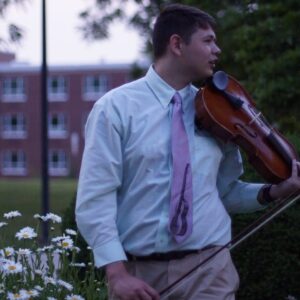
Cohen Poe, a sophomore majoring in music, explored pre-college music education through the SIU Youth Orchestra. He composed and conducted a piece titled “Fanfare for a Fish” and taught music theory and aural skills.
“This experience expanded my résumé and gave me meaningful experience for graduate school,” Poe said. “I got paid to do something I enjoy. I’ll hold on to this experience my whole life.”
These stories demonstrate how Thrasher’s generosity is inspiring Salukis to embrace discovery, connect with mentors, and prepare for careers and graduate study.
“SIU emphasizes the value of undergraduate research, as reflected by our recognition as an R1 institution,” said Dr. Costas Tsatsoulis, vice chancellor for research and dean of the Graduate School. “Investment from our alumni is integral to continuing this mission. Thank you for providing the support that acts as a guiding light for our student researchers.”
For Thrasher, who once followed her professors’ advice into a career that combined science and finance, there is a sense of coming full circle.
“I’m grateful SIU gave me that opportunity—and I’m honored to help create it for others,” she said.
Matt Arnold, a 2000 Southern Illinois University Carbondale alumnus, remembers the moment he heard about the launch of the Saluki Student Investment Fund (SSIF). It was his final semester, and the finance major with a minor in accounting immediately saw the opportunity.
“As soon as I heard about it, I knew I had to be involved,” Arnold said.
Arnold joined the inaugural class of just eight students. Their mission: build the foundation of a student-run investment fund seeded by a $25,000 donation. Today, that fund has grown into a $4.2 million operation.
“I saw the dirt mounting and the foundation being built,” he said. “What was done after I left was a beautiful job constructing something that now has a 25-year history.”
A Launching Pad
Arnold has met many students who launched successful careers thanks to their SSIF experience. He said employers value the skills students gain through the fund—teamwork, investment analysis, and the ability to accept and apply feedback.
“It shows that a student knows how to invest, work with others, and use constructive feedback to improve,” he said.
He also noted that the fund helps students build professional networks, which often lead to their first jobs.
“Beyond hands-on experience, it gives access to professionals who are established in their field and know how difficult it is to break into this business,” Arnold said.
Arnold grew up in Waterloo, Illinois, and moved to Jackson County, where his father owned an automotive business. Following in his parents’ footsteps, he chose SIU for its proximity and strong business programs.
He explored several areas within the College of Business and Analytics before a finance class “just clicked,” he said. Inspired by the media’s portrayal of stock analysts, Arnold pursued a career in finance and has since become a respected financial research analyst in St. Louis.
At Edward Jones Investments, he leads half of the Equity Research department’s analysts, helping financial advisors make informed investment decisions.
“My job is telling advisors the best place for their clients’ money to appreciate over time, while managing risk and avoiding dire financial outcomes,” he said.
Giving Back
Arnold’s connection to SSIF didn’t end at graduation. He returned to support the fund when it began competing in the CFA Institute’s annual Chartered Financial Analyst Challenge in Virginia. Students pitch investment recommendations and develop detailed theses.
“I was asked to join as an advisor for a group,” he said. “Since then, that has been a big piece of how I dedicate my time to the fund.”
Though his time as a student member was brief, Arnold said mentoring current students is his favorite way to support SIU.
“Anytime I’ve been asked to give back to the fund or department, I’m inclined to help,” he said. “I remember how I wished I had more of a network, especially toward the end of my college career.”
Under the guidance of faculty advisor Dr. Tim Marlo, the SSIF continues to provide students with real-world experience and mentorship. Arnold hopes the program will continue to thrive for future generations of Salukis.
“Supporting the SSIF gives future students the same incredible opportunities,” he said. “As precious a commodity as time is, you will feel so rewarded when you invest some of it into young people. It brings you back to what it was like when you were there.”
Construction of the new Campus Lake fountain is expected to be completed by the start of the 2025 school year. The cascade-style spout will be located just offshore near the Becker Boathouse. The project is funded by a gift from the late Tilden “Tim” Parks, a 1976 SIU graduate, along with contributions from more than 200 donors.
Mark Owens, director of Facilities and Energy Management, said the fountain serves both aesthetic and environmental purposes.
“It also keeps the water cooler in that area, which is better for the environment and the aquatic life living in the lake,” he said.
A 500-foot cable will run beneath the surface of Campus Lake, and a 25-horsepower motor will continuously propel water. The shoreline’s power source will also control a timer to regulate water levels.
“We are so excited for this new addition, as Campus Lake is one of the most beloved features on campus,” said Corne Prozesky, director of the SIU Recreation Center. “It’s going to bring such beauty to Campus Lake.”
Salukis are buzzing with excitement about the lake’s functional and fashionable new feature.
“It helps people experience nature as they walk,” said Jean Minor, former chief academic advisor for the College of Arts and Media, who walks the Campus Lake path multiple times a week. “The fountain will also create a meditative space where people do not necessarily have to be busy walking. They can simply sit and watch it if they choose.”
The project will also include lighting around the fountain to illuminate the west side of campus. In addition to circulating the lake’s water, the fountain will help prevent the spread of harmful algae.
James Herald III, a fisherman who frequents Campus Lake, said the shore is an ideal spot to unwind, as it’s usually not too crowded.
“The scenery is perfect. It’s amazing that a lake itself encourages the whole community to come together,” he said.
Nearly 80,000 visitors enjoy Campus Lake annually. The lake also hosts the annual Great Cardboard Boat Regatta in the spring, a family-friendly event that draws hundreds of participants and spectators.
The Saluki Student Investment Fund (SSIF) at SIU Carbondale offers hands-on experience in investment research and management. The student-led organization is modeled after real-world investment management firms, enhancing students’ academic and professional experience. The program provides access to the necessary resources while fostering relationship building among peers, alumni, and industry professionals.
The SSIF began as a small student-run portfolio in 2000, starting at $25,000. 25 years later, students have grown the program and now handle $4.3 million in assets. They primarily focus on making investment decisions for their main client, the SIU Foundation. Members also manage funds for the College of Business and Analytics portfolio.
Noe Estrada
“There are few college funds that reach the size of ours,” said Noe Estrada, a junior and the team leader of the SSIF’s consumer discretionary and staples sector. “It’s a lot of work, and it’s a testament to the resilient nature of this team.”
Estrada explained the RSO’s strategy for calculating and analyzing the amount of funds generated from trading stocks. The process begins with looking at a company’s competitive advantage, and what drives its overall growth. From there, the fund calculates and analyzes sectors driving the company’s performance, using that data to determine strategic outcomes.
Through the SSIF, Estrada had access to a $30,000 Bloomberg Terminal yearly subscription. He was also able to use the knowledge he gained from the organization to build his own three-statement financial model.
“The Saluki Student Investment Fund changed my life. I’m going to enter a competitive job market with a significant skillset. What is being done in here sets the foundation to our future success.”
Jimmy Lin
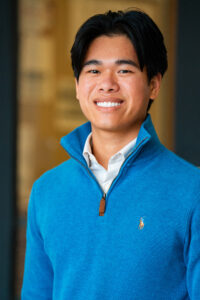
Jimmy Lin, a sophomore finance major who serves as an analyst for the healthcare sector, emphasizes the importance of the impact that the SSIF has on professional development.
“Since the SSIF is the primary asset manager of the SIU Foundation, trading stocks using real money may seem intimidating at first. But once you are trained, it becomes second nature,” he said. “Those capabilities and abilities that we learned during our time in the organization will carry over into the corporate world.”
Although he agrees that the idea of students managing millions of dollars may seem daunting, Lin assures that the money contributed to the fund is in “good hands.”
“It makes us think a lot harder about the decisions we make. We must remain diligent, meaning we spend money with caution. It helps us strategize through the process and take it seriously.”
Kate DeGrazia
Kate DeGrazia, a senior and the team leader for the real estate sector, explained that the SSIF operates in a way that parallels the S&P 400 index. “Depending on how it’s divided up, the SSIF sectors are structured the same. We pick the strongest stocks so we can beat out the index,” she said.
Community building and networking are also crucial aspects of the SSIF. “Meeting alumni is one of my favorite parts of the fund. It’s nice to see what my peers who are a couple years older than me accomplish,” said DeGrazia. “It’s like having big brothers and big sisters; knowing that alumni care and will extend their hard-earned money back to us has really shaped my experience.”
The program is not only open to business majors, according to DeGrazia. “We’ve had premed, automotive, and engineering students too, and that uniqueness helps us out. There are so many different minds collaborating on each task, and we can all share our own perspectives.”
Sarah Farris
Sarah Farris, a senior who is the team leader for the health care sector, originally joined the RSO to learn more about investing in her own future. The fund also dives deeper into subject matter learned in her marketing classes.
“While it was scary handling real-world money at first, it provided a good experience and helped us gain confidence. It’s an honor that they trust students to be able to manage that amount of money.”
Farris says that leading the organization was a crucial part of her college experience. She said the knowledge gained through the fund is comparable to working a job for all 4 years. The SSIF has led to a variety of post-graduate opportunities for her and her classmates.
“Knowing that we have money in our back pockets to use for different experiences helps ease our minds,” said Farris.
Presley Ornelas
Presley Ornelas, a sophomore and an analyst for the real estate sector, first learned about SSIF when visiting his friends at SIU, who were involved with the organization. He attributed the SSIF to helping him grow a network of supportive peers and mentors. “Whether it’s visiting financial firms, competitions, or helping the community, it’s a great experience.”
This year, Ornelas and 16 other SSIF students went to NYC to visit Dow Jones and Bloomberg. They received invaluable insight from established professionals while growing their network. Through experiences like this field trip, he learned more about professional and strategic development.
“Thanks to the SSIF, I’ll already be prepared to take the CFA exam, and I’ll have my Bloomberg marketing certification,” says Ornelas.
Beyond building connections with alumni and potential job recruiters, members shadow industry professionals in their day-to-day experiences. This offers a chance to learn from these mentors.
“No matter how an alum decides to give back to the SSIF, knowing we have their support is priceless,” he said.
Costs relating to operational expenses, student support, advisor stipends, and subscriptions are preserved primarily through external support. Those who wish to support the SSIF can get involved by meeting critical funding needs that maintain the organization’s impact. To learn more about how to make a difference in the lives of future investment leaders or to make a gift, visit give.siu.edu/ssif.
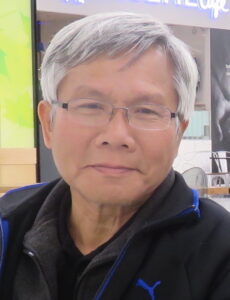
In October 1971, Man Nguyen arrived in Carbondale from Vietnam with three high school friends, the support of his family, and a dream of one day returning to his homeland. Encouraged by the older brother of one of his friends who was already attending Southern Illinois University, Nguyen applied and was accepted—a decision that would mark the beginning of a life-changing chapter.
“I feel blessed by fate to have ended up in Carbondale,” Nguyen said. “I had never heard of Southern Illinois University or seen what Carbondale looked like back in Vietnam.”
Upon arrival, Nguyen and his friend Long Nguyen (no relation) were welcomed into the home of Mr. Earl Caspers, a lecturer in SIU’s School of Education who was pursuing a doctoral degree. “Mr. Caspers acted like a father figure,” Nguyen recalled. “He made us breakfast and dinner, took us to and from campus—what a wonderful human being. I still think of him as a saint. I’ve often asked myself, would I have done the same?”
All Vietnamese students at the time were required to complete the Center for English as a Second Language (CESL) program before beginning SIU coursework. Eventually, Nguyen and Long moved into their own apartment but remained close with Caspers. “After he finished his Ph.D. in 1973, he moved to the University of Arkansas in Fayetteville but returned for our graduation in 1975. What a touching moment. He was a true friend to all the Vietnamese students.”
Nguyen’s academic path was further supported by Jared Dorn, SIU’s international student advisor at the time, who awarded him a tuition waiver. This enabled Nguyen to remain at the university and complete his undergraduate studies. To cover room and board, he worked part-time as a janitor at the Student Center, earning $1.60 per hour. Nguyen and other Vietnamese students lived off campus at 319 1/2 E. College, paying $96 per quarter in rent during the university’s quarter system years.
“We enjoyed college life, studied hard, and had fun too,” he said. “We hung out at Jim’s Pizza, Dairy Queen, and the Varsity Theater downtown.”
After graduating in 1975 with a degree in mathematics, Nguyen embarked on a career in information technology. He first joined Lockheed Electronics in Houston, a NASA contractor supporting the space shuttle program. He later worked for Marathon Oil as an IT consultant, where he had an unexpected encounter with SIU alumna and retired NASA astronaut Joan Higginbotham. She autographed a photo of herself featured on the cover of the March 2007 SIU Alumni Magazine, which he still keeps.
Nguyen eventually retired after a distinguished career with Lockheed, Marathon Oil, and SAIC, a global technology company. His work allowed him to travel internationally to countries such as Ireland, Tunisia, Egypt, India, and Indonesia. Throughout his life, Nguyen has returned to SIU Carbondale many times to reflect, reconnect, and enjoy the campus—especially in the fall.
This year, in celebration of the 50th anniversary of his graduation, Nguyen established the Man and Lien Nguyen Mathematics & Computer Science Scholarship Fund with a $25,000 gift. The fund will provide two annual scholarships: one for a student majoring in mathematics or computer science, and another for a student majoring in mechanical engineering. The latter is in memory of his friend Long Nguyen, who graduated alongside him in 1975 with a degree in mechanical engineering.
“Retention is so important,” Nguyen said. “I want students to finish their SIU degrees. I’m thankful for that tuition waiver that kept me at SIU, and I want my scholarship to do the same for someone else.”
Nguyen returned to SIU this May to celebrate his 50th reunion—an emotional experience that also gave him the opportunity to reconnect with Mr. Dorn, who still resides in Carbondale.
“We spent countless hours sharing SIU stories, then and now,” Nguyen said. “I feel so thankful—grateful—for Mr. Caspers’ generosity and Mr. Dorn’s kindness more than half a century ago that allowed me to stay and earn an SIU degree.”
Would he relive his college days at SIU if given the chance?
“Absolutely,” Nguyen said. “I’m proud of my alma mater, proud to be a Saluki, and most importantly, proud to be an American.”
Man Nguyen (center) joins Jen Badiu, director of development, and Chancellor Austin Lane at the Chancellor’s Reception during the Saluki Takeover Tour in Houston.
Nearly 500 fill the SIU Student Center for major fundraiser
By Jeff Wilson
CARBONDALE – The third annual Saluki Ball packed the Southern Illinois University Student Center ballrooms with a sold-out crowd, as SIU’s premier fundraiser returned home after two successful years in Chicago.
Nearly 500 alumni, friends, students, and supporters joined Chancellor Austin Lane, President Dan Mahony, the SIU Foundation, and others on Saturday, April 26, for the black-tie optional event. Marc Silverman, ESPN radio host and 1993 SIU graduate, served as emcee.
Proceeds from the ball support the university’s Bridge the Gap Scholarship Fund, which helps students cover outstanding bursar bills.
“When something comes up during their journey, they need to know that we have their back,” Chancellor Lane said. “We need your support as we continue to build a fund that helps students stay on track to graduate on time.”
For the third consecutive year, Dr. Glenn and Jo Poshard served as presenting sponsors.
“I guarantee you there’s someone right now hoping and praying that somebody will give them a scholarship — that there’s some way for them to go forward,” Jo Poshard said. “The need is huge. If you’re thinking about giving, don’t hold back. You could change a student’s life.”
Since its launch, the Saluki Ball has generated significant momentum for the Bridge the Gap Fund, providing critical assistance to students facing unexpected financial hardships. To date, dozens of students have received tens of thousands of dollars, helping them resolve bursar balances and stay enrolled.
“The research shows that if a student has to take a break because of financial issues, they’re less likely to graduate,” Dr. Poshard said. “When we support students with scholarships, we not only help them graduate and get jobs but also become engaged citizens.”
Guests enjoyed a full program, award ceremony, catered meal from Mary’s, and a live performance by dance music legends Exposé.
“Over the past few days, we spent time with business leaders, alumni leaders, and many others. We attended the 50th Boat Regatta and now cap it off with the Saluki Ball,” President Mahony said. “It’s a reminder of how special this place is and how fortunate we are to be part of the Saluki family.”
Student Impact
Students who received Bridge the Gap funds in previous years shared how the support affected their SIU experience.
“Finding out about the Bridge the Gap fund was life-changing for me,” said Iyanu Alabi. “When that money came through, I was smiling ear to ear.”
Jessica Hardges, a nontraditional student and mother, said the support made an immediate difference.
“When we found the Bridge the Gap funds, I was relieved,” she said. “It lifted a big weight off me.”
DJ Lovejoy, an SIU senior, said the help he received reminded him of the strength of the Saluki community.
“It takes a lot to come to school and get your degree,” he said. “When I found out about the Bridge the Gap funds, I felt blessed.”
Funds raised by the SIU Foundation are distributed by the Office of Anti-Racism, Diversity, Equity, and Inclusion based on individual student needs.
“The funds raised tonight will have an incredible, direct impact on students who need your support to stay enrolled,” said Diane Compardo, president of the SIU Foundation Board of Directors.
Honoring Achievement
During the first two Saluki Balls, five individuals were honored with the Saluki Lifetime Achievement Awards — Dr. Pam Pfeffer, Dr. Phil Pfeffer, Greg Cook, Scott Moller, and Toni Williams. All five were in attendance during the 2025 Saluki Ball.
This year, the honorees were Dr. John Jackson and Dr. James Rosser.
Dr. Jackson and his wife, Nancy, have been part of SIU and the Carbondale community for over 50 years. He has served in multiple leadership roles, including professor, associate dean and acting dean of the Graduate School, dean of the College of Liberal Arts, provost, and interim chancellor. He was also instrumental in the establishment of the Paul Simon Public Policy Institute.
He is widely recognized for his thoughtful leadership and deep institutional knowledge, as well as his passion for promoting civic engagement and public service. Since 2002, he has served as a visiting professor at the Paul Simon Institute, where he directs the Demuzio Internship Program and contributes regularly to research, public commentary, and media analysis.
The Jacksons have dedicated their lives to education and community service. Together, they established the John S. and Nancy Jackson Scholarship Endowment to support political science students in the College of Liberal Arts. In 2002, the couple was named Carbondale Citizens of the Year, and in 2024, the lobby of the Paul Simon Institute was named in their honor.
“SIU and Carbondale and Southern Illinois have been a really great place for us,” he said. “Here it is 55 years later, and I’m glad I came, and I’m glad we stayed.”
Dr. James M. Rosser is a distinguished three-degree alumnus of SIU and a lifelong advocate for education, equity, and opportunity. A native of East St. Louis, he came to SIU on a basketball scholarship and earned his bachelor’s and master’s degrees in microbiology, followed by a Ph.D. in health education administration. During his time at SIU, he also served as a resident assistant, faculty member, and founding director of the university’s Black American Studies program.
Dr. Rosser served as president of California State University, Los Angeles, from 1979 to 2013, making him the longest-serving president in the Cal State system. His career includes leadership roles at the state and national levels in higher education, science, and public policy, and he is widely recognized for his work advancing diversity and student achievement. A dedicated philanthropist, Dr. Rosser has established multiple scholarships at SIU, including a $1 million endowed scholarship for men’s basketball student-athletes pursuing STEM degrees—the largest of its kind in Saluki Athletics history.
He has received numerous honors for his work, including SIU’s Distinguished Alumni Award, an Honorary Doctor of Humane Letters, and national recognition for his leadership in higher education.
“I just would hope that people would remember why I did what I did. I did it because the university had done so much for me,” he said. “That all came about through being this poor kid from a segregated high school in East St. Louis, Illinois, who ran into some extraordinary people, who were not African Americans, who treated me with respect and helped create opportunities for me, and I never forgot that.”
Each year, two students are recognized with the Saluki Success Award. This year’s recipients were Gabe Kosco and Detrina McCoy.
Kosco is a senior from Marion, Illinois, in the College of Business and Analytics, preparing for a career with Amazon after graduation. A proud Saluki with deep family ties to SIU, Gabriel has been a leader on campus through the Student Alumni Council, the Association for Supply Chain Management, and as a student worker at the SIU Foundation.
“Through the SIU Foundation, I’ve been lucky enough to personally thank the donors who help make so much possible at SIU. And through the Student Alumni Council with the Alumni Association, I’ve been able to connect with our community through service and volunteer work — something that’s meant a lot to me,” he said.
McCoy, a senior from Chicago studying mortuary science, is driven by compassion and service. She’s made the Dean’s List, led the TRIO Achievers program, and volunteered with local nonprofits and schools. After completing an internship at Calahan Funeral Home, she’s pursuing her dream of opening her own funeral home to support families in need.
“I’m also incredibly grateful to my mentors and peers—your support, encouragement, and sometimes even your tough love has helped shape me into the person I am today. This award is not just a reflection of my efforts, but a tribute to all of you who have walked alongside me throughout this journey,” she said.
Previous Saluki Success Award winners are Emily Bakri, Luis Barrera, Dylan Chambers, and BriYanna Robinson.
Rolling Out the Maroon Carpet
The Student Center ballrooms provided a luxurious setting, welcoming Illinois State Rep. Paul Jacobs, SIU Board of Trustees Chair Phil Gilbert, Carbondale Community High School Superintendent Daniel Booth, and many local business owners, educators, and dignitaries.
The evening kicked off with a cocktail hour, sponsored by Moneta, in the International Lounge. A maroon carpet led guests from photo booths to a live broadcast hosted by Swinford Media Group. Guests were also interviewed by the SIU Alumni Association and SIU Foundation for social media features.
The program opened with a surprise performance by the Saluki Pep Band and nationally recognized trumpet ensemble, the Saluki Shakers, along with Grey Dawg. After remarks from Lane, Mahony, Compardo, and the awardees, Steve Falat and Silverman led the paddle raise for the Bridge the Gap Fund.
“There’s an energy and excitement that’s palpable,” Silverman said. “I hope you can feel it.”
The night concluded with an outstanding performance by Exposé and music from DJ Mystify.
Drs. Pam and Phil Pfeffer were the Decorations Sponsor for the event, and Southern Illinois Healthcare and SIU Credit Union were Saluki Silver sponsors.
The third annual Saluki Ball, presented by The Honorable Glenn and Mrs. Jo Poshard, will kick off in style this April. Moneta will serve as this year’s Cocktail Hour Sponsor. As guests arrive at the SIU Student Center for an evening of elegance, purpose, and Saluki pride, Moneta’s sponsorship sets the stage for a celebration that invests in the future.
This year’s sponsorship is led by proud Saluki alumna Diane Compardo, B.S. ’91, M.S. ’92, and Ron Wienstroer, M.S. ’91 — partners at Moneta and champions for SIU and its students.
“The Saluki Ball serves as a true reflection of the spirit and pride of being a Saluki. In our continued commitment to giving back to this incredible community, we are excited to sponsor the cocktail hour this year. We’re thrilled to be part of this special event that celebrates our shared history and invests in the future of SIU,” said Compardo.
Compardo, president of the SIU Foundation Board of Directors, is a member of the SIU Women’s Leadership Council and the College of Business and Analytics Hall of Fame. A strong advocate for mentorship and philanthropy, she has long supported efforts to connect alumni with current students and elevate opportunities for women through events like the Saluki Women’s Weekend, where Moneta is also the 2024 Women in Empowerment Conference Sponsor.
Her husband and business partner, Ron Wienstroer, has been a driving force behind the success and national growth of Compardo, Wienstroer & Janes, a Moneta team recognized for its high-touch client experience and strategic leadership. A two-degree SIU alumnus, Wienstroer holds both a bachelor’s and master’s degree in accounting and is a Certified Public Accountant (CPA). Before joining Moneta, he spent 17 years at Ernst & Young, where he rose to partner and held leadership roles in tax strategy and business development.
Today, Wienstroer continues to support his alma mater as a member of the SIU College of Business Dean’s External Advisory Board and the School of Accountancy Advisory Board. His professional excellence is matched by a deep commitment to mentorship, client care, and community service — all rooted in his Saluki education.
The Saluki Ball, set for Saturday, April 26, brings together alumni, students, and friends of the university for a night of dining, dancing, and fundraising in support of student scholarships. With the goal of helping students bridge financial gaps and fulfill their potential, the event exemplifies the mission and momentum of the Imagine SIU 2030 fundraising campaign.
For Jeri Brooks, Southern Illinois University was destiny. A Carbondale native, Brooks grew up immersed in the Saluki spirit—not just as a local but as part of a multi-generational legacy rooted in love, resilience, and community pride.
Her father, Thurman Lee Brooks, Sr., earned a basketball scholarship to SIU, and her mother, Betty Brooks McCollum, pursued her master’s degree there. Eventually, both Jeri and her brother followed in their parents’ footsteps, solidifying SIU as a cornerstone of their family history. When her father passed away, SIU extended a powerful gesture of support: eight semesters of complimentary tuition for both children.
“That gesture meant everything,” Brooks said. “SIU became more than just a university—it became part of our story.”
While at SIU, Brooks earned a Bachelor of Science in communications with a specialization in public relations. Her time on campus laid the foundation for a career defined by ethics, strategic vision, and the pursuit of economic empowerment.
One of her most transformative experiences was joining Delta Sigma Theta Sorority, Inc. in 1993.
“Meeting those 11 women who became lifelong friends changed everything,” she said. “And I was fortunate to share that journey with ‘The Originals,’ my closest friends from Carbondale.”
Brooks credits the Rev. Dr. Norman Greer as a formative influence during her time at SIU.
“He didn’t just teach theory—he brought real-world experience into the classroom,” she said. “That blend of knowledge gave me the confidence to step into any space with purpose.”
With over two decades of experience, she helps companies, political leaders, and communities build strategies that expand influence and create lasting economic mobility—because for her, freedom is not free without economic empowerment.
Known for her strategic thinking and high-impact execution, Brooks has been repeatedly recognized as a top-tier lobbyist, appearing on Capitol Insider’s Texas Lobby Power Rankings in 2015, 2019, 2021, 2023, and 2025. She was also named a 2021 Top Lobbyist by the National Institute for Lobbying & Ethics.
Brooks is passionate about creating lasting change—not just through policy but through economic freedom. Her motto, “excellence is my minimum,” defines her professional ethos and personal mission.
Brooks is often recognized for breaking barriers—but she’s quick to challenge the celebration of being ‘the first.’
“We should not still be celebrating the first woman, the first Black woman, the first anything,” she said. “It’s time we elevate our expectations. Excellence should be the norm.”
Still, she acknowledges one meaningful moment: being the first Black woman honored in the Carbondale Community High School Hall of Achievement.
“But real progress is ensuring I’m far from the last,” she added.
Despite her success, Brooks never forgets where she came from. Her commitment to SIU runs deep. She has endowed a scholarship to support diversity initiatives under the university’s ADEI framework, and she continues to advocate for the university’s growth and future.
“SIU gave me more than an education—it broadened my world,” she said. “If my contribution can help restore its full potential, then giving back isn’t just meaningful—it’s necessary.”
Brooks encourages young women aspiring to enter the political and public affairs world to be strategic and assertive. Her advice is rooted in experience and unwavering determination:
Master the Game: Understand policy and power.
Own Your Power: Know your value.
Build Economic Freedom: It’s the key to true influence.
Create Community: Success is built with others.
Stay in the Fight: Resilience is non-negotiable.
Reflecting on Women’s History Month, Brooks honors the legacy of her grandmother and mother—the original entrepreneurs in her life. Her grandmother ran the family’s home-based auto repair business and raised six daughters with unshakable fortitude. Her mother turned their family’s pound cake recipe into a business and continues to thrive as a Mary Kay consultant.
“They didn’t wait for opportunity—they created it. That spirit of hustle and ownership laid the foundation for everything I am,” she said.
As for her legacy, Brooks hopes to inspire the next generation of women to embrace their power, lead with excellence, and build pathways to economic and social transformation.
Her advice to her college-aged self? “Take more risks. Trust your instincts. Be fearless—God has your back.”


 By Ava Steffens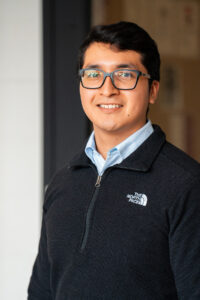



 In October 1971, Man Nguyen arrived in Carbondale from Vietnam with three high school friends, the support of his family, and a dream of one day returning to his homeland. Encouraged by the older brother of one of his friends who was already attending Southern Illinois University, Nguyen applied and was accepted—a decision that would mark the beginning of a life-changing chapter.
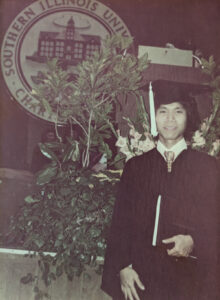 After graduating in 1975 with a degree in mathematics, Nguyen embarked on a career in information technology. He first joined Lockheed Electronics in Houston, a NASA contractor supporting the space shuttle program. He later worked for Marathon Oil as an IT consultant, where he had an unexpected encounter with SIU alumna and retired NASA astronaut Joan Higginbotham. She autographed a photo of herself featured on the cover of the March 2007 SIU Alumni Magazine, which he still keeps.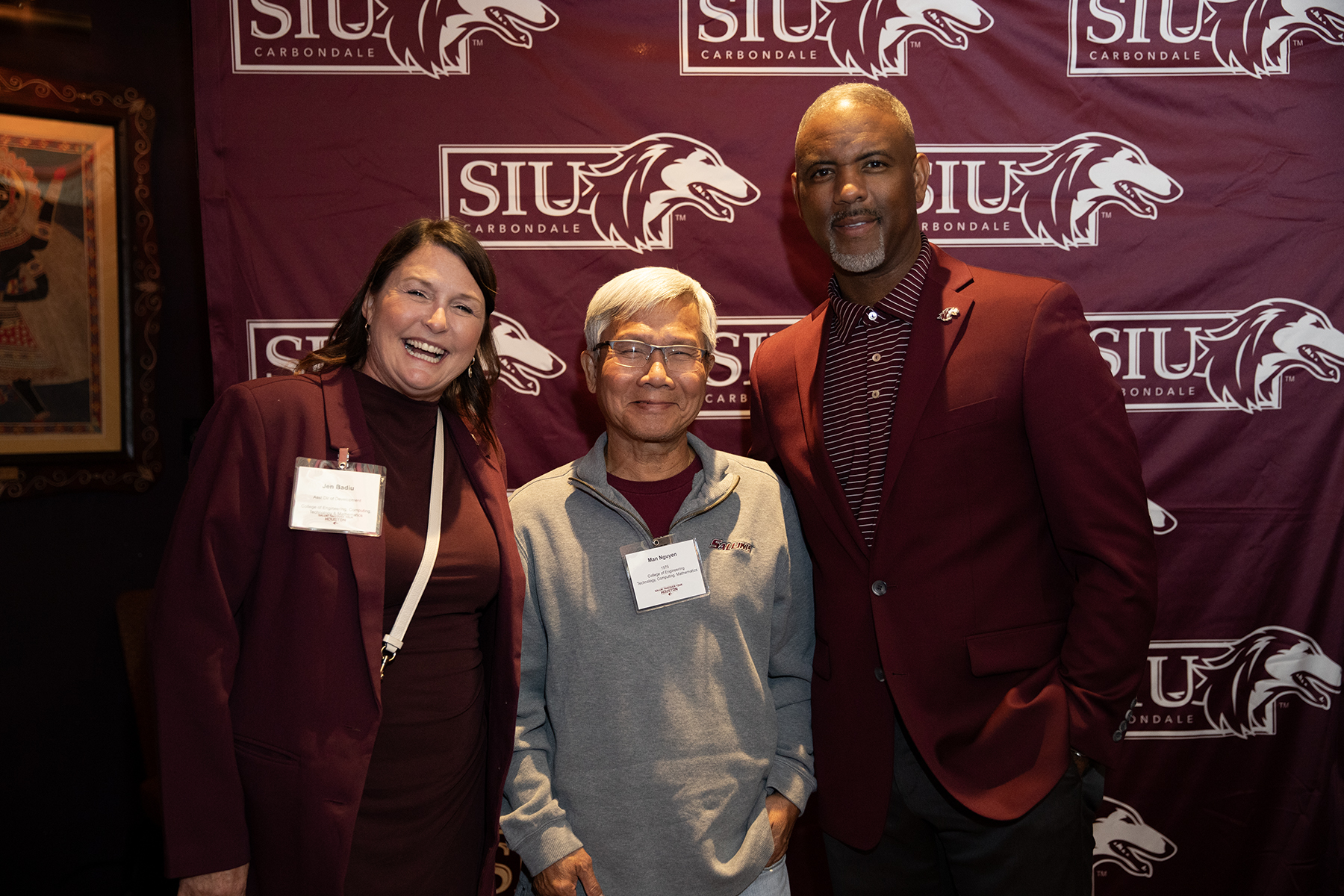
 The third annual Saluki Ball, presented by The Honorable Glenn and Mrs. Jo Poshard, will kick off in style this April.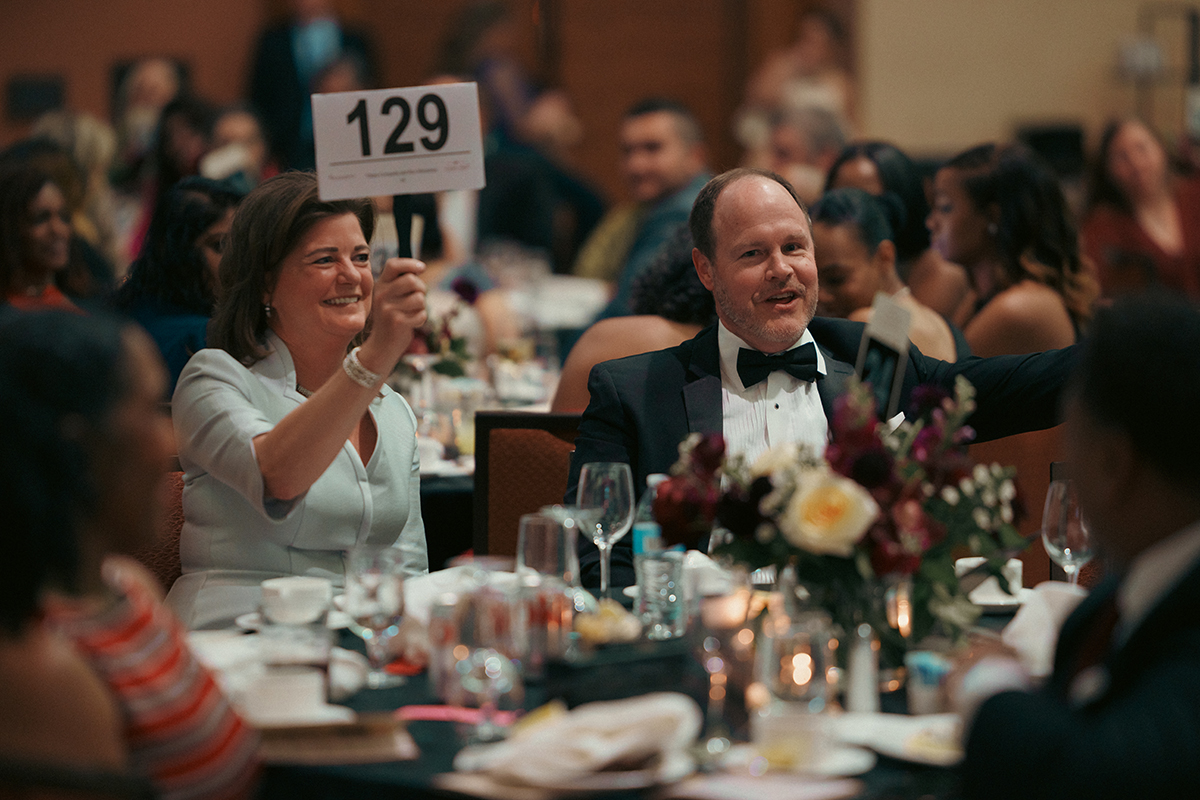
 For Jeri Brooks, Southern Illinois University was destiny. A Carbondale native, Brooks grew up immersed in the Saluki spirit—not just as a local but as part of a multi-generational legacy rooted in love, resilience, and community pride.